
Have you ever had a really peaceful experience? A time when, somewhere deep inside your heart and mind, you simply feel good or unafraid; and somehow you know, or at least hope, that the universe is unfolding exactly as it should? I know I've been there.
Peace can come in two different packages. First is peace because of the circumstances. This is when the sun is shining, everything is perfect, and you reflect on life with a smile on your face and the most gratitude you've ever felt. But second, second is peace in spite of the circumstances. This is when nothing is going right, you're at rock-bottom in the midst of darkness; bleeding, hurting, dying - but even so, you still hear that little voice that says, "Don't give up. Things will turn out. There's hope yet."
In this way, if we choose to, we can feel peace in the darkness. And so can our characters.
In Inheritance by Christopher Paolini, there's a fantastic scene in which Eragon realises that the world is round. He has the weight of the world on his shoulders and fate of it in his hands, and he has just flown out of a terrible storm on the back of his dragon. But despite this, when he notices the curvature of the horizon (something he has never seen before), he's wonderstuck. And he forgets all of his worries for a moment and finds peace, in awe of the world's roundness.

Or what about the scene in The Return of the King when Sam and Frodo are on the slopes of Mount Doom? Who could forget it? The pair are famished and parched, frightened and lost, and surrounded by blackness and an inhospitable landscape. They're cold and dying. But in such despair, and after all the horrors they've been through, the recall to each other life as it blissfully was back in the Shire - and not only find peace, but also the hope and courage they need to complete their quest. The result? An incredibly moving scene.

Or in The Matrix, when the machines are closing in and Trinity has every reason to run screaming. But instead, she finds peace enough to stay with Neo and even say, "I'm not afraid anymore."
Am I making sense yet?
Having your characters find peace in the darkness, usually near the climax of the story, can heighten the emotional investment of the reader. It makes the reader long further for the protagonist to achieve his or her desire, because we admire characters who can trade fear for peace, sorrow for joy. We want those kind of characters to win.
And when they do, the reader is all the more moved because of it.
Peace can come in two different packages. First is peace because of the circumstances. This is when the sun is shining, everything is perfect, and you reflect on life with a smile on your face and the most gratitude you've ever felt. But second, second is peace in spite of the circumstances. This is when nothing is going right, you're at rock-bottom in the midst of darkness; bleeding, hurting, dying - but even so, you still hear that little voice that says, "Don't give up. Things will turn out. There's hope yet."
In this way, if we choose to, we can feel peace in the darkness. And so can our characters.
In Inheritance by Christopher Paolini, there's a fantastic scene in which Eragon realises that the world is round. He has the weight of the world on his shoulders and fate of it in his hands, and he has just flown out of a terrible storm on the back of his dragon. But despite this, when he notices the curvature of the horizon (something he has never seen before), he's wonderstuck. And he forgets all of his worries for a moment and finds peace, in awe of the world's roundness.

Or what about the scene in The Return of the King when Sam and Frodo are on the slopes of Mount Doom? Who could forget it? The pair are famished and parched, frightened and lost, and surrounded by blackness and an inhospitable landscape. They're cold and dying. But in such despair, and after all the horrors they've been through, the recall to each other life as it blissfully was back in the Shire - and not only find peace, but also the hope and courage they need to complete their quest. The result? An incredibly moving scene.
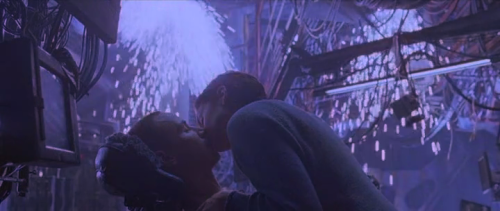
Or in The Matrix, when the machines are closing in and Trinity has every reason to run screaming. But instead, she finds peace enough to stay with Neo and even say, "I'm not afraid anymore."
Am I making sense yet?
Having your characters find peace in the darkness, usually near the climax of the story, can heighten the emotional investment of the reader. It makes the reader long further for the protagonist to achieve his or her desire, because we admire characters who can trade fear for peace, sorrow for joy. We want those kind of characters to win.
And when they do, the reader is all the more moved because of it.


