Showing posts with label Writing. Show all posts

Monday, June 4, 2012

Writing Advice: What Is A Protagonist? (Part 1)

And more importantly, how do you write a good one?

The first thing to note is that the protagonist of a story is not always the same as the viewpoint character, or even the main character. They can, of course, be the same character (like in The Hunger Games), but not always. Often these three terms are confused and defined synonymously, but there is a subtle difference between them.

The veiwpoint character is the one who is telling the story, regardless of whether it is told in first-person or third-person, while the main character is the character the story is focussed on. In the Adventures of Sherlock Holmes, Dr. Watson narrates the story, making him the viewpoint character, while Holmes is the main character. In George Orwell's Animal Farm, there is no viewpoint character at all - the POV is omniscient, as if the author is narrating the story - and the main character is Napoleon.

The protagonist, however, differs in one significant way: it is the character who possesses the most willpower. He must have a strong and conscious desire, more prominent than any other character's, that drives him to act throughout the story - although, sometimes, the desire causes the protagonist to be inactive.

In the Greek tragedy, Antigone, by Sophocles, the main character of the story is Creon, the King of the city Thebes, as it focusses on his downfall. The protagonist, however, is his niece, Antigone, who desires to bury her deceased and treasonous brother (thus showing his memory respect). As it happens, Creon is also the antagonist of the story, because he is the one who gets in the protagonist's way.

So. I'm glad we have that sorted.


One thing to remember about writing a protagonist is that he must always have the capacity to pursue, and then obtain, his object of desire. He does't have to reach his goal, but he must be able to. The reason for this is that a reader will not connect with a character who doesn't have any chance of succeeding, because no-one wants to believe that their own desires are unachievable. We carry hope until the end. In this way, a character with impossible goals is not empathetic. And, plus, why would we waste our time on someone who is literally hopeless?

This, among many others, is one reason why I dislike Holden from The Catcher in the Rye. His desire is impossible: to cling onto his childhood forever and help others to do the same. While this goal shows insight into his character, it frustrates me in terms of story, because he would never actually to be able to achieve it. And even if he could, he probably wouldn't do anything about it (because, hey, it's Holden Caulfield).

In short, a protagonist differs from other characters because he or she has a desire that is achievable prominent in the development of the story.

Stay tuned for part two. ... (Oh, and you may have noticed that I am posting again after a much-too-long hiatus. I know, I'm awesome.)

Tuesday, April 17, 2012

Writing Advice: Inspiring Dialogue

Have you ever come across dialogue that is meant to be inspiring, but just isn't?

Whether it was in a novel, film, play, TV show, short story, or whatever, you found yourself cringing. The line (or monologue - which is even worse) was supposed to be wise and motivational, a deep insight into life, but the way it came out made you think, Puh-lease, this is so lame. No one would ever say that in real life - it's so cliché!

I'll give you an example from Eragon by Christopher Paolini (and this is one of the few criticisms I'll make of it because it's one of my favourite books). This monologue comes from Eragon's wise-guy uncle:
"First, let no one rule your mind or body. Take special care that your thoughts remain unfettered. One may be a free man and yet be bound tighter than a slave. Give men your ear, but not your heart. Show respect for those in power, but don't follow them blindly. Judge with logic and reason, but comment not. ..."
And that's only half of it.

Of course, these are all great messages that Paolini expresses, profound and true. But do they connect with us? Not really, no, because this kind of self-aware insight is rarely found in real life. No-one I know would ever speak like that, and if they did, I'd have to stifle hysterical laughter.


So how does a writer express his or her ideas, viewpoints and life lessons without stating them blatantly? Through story. Through events and turning points and character responses. Every time we write, we are showing the reader what we think life is like. "This is my perception. This is my vision of the world, and the nature of the people who inhabit it. This is what these people would do under these circumstances for these reasons."

Story is a metaphor for life. It's a vessel through which readers become emotionally attached to an idea. You could tell someone of the repulsiveness of teen violence, or they could read the Hunger Games. Which do you think would leave them more convicted? You could have a character say, "There's always hope," or you could show it by having your protagonist achieve his or her goal despite the immense odds stacked against them. Again, which would connect to the reader more?

When it comes down to it, it's a question of showing or telling.

And of course, there is a place for telling. There is a place inspiring dialogue - JRR Tolkien was especially good at using it. But if you use it too much, or in the wrong way, it ends up having the opposite effect.

So, as a rule of thumb, let telling dialogue compliment your showing. Express yourself first and foremost through events and character - and if you need dialogue to finish the job, go for it.

Monday, February 27, 2012

Writing Advice: Making Change Meaningful

I'm studying The Catcher in the Rye by J.D. Salinger in my English class at the moment, and one of the things that annoys me about the book is that there's not plot. Nothing. Zip, zilch, nil. The whole thing is made up of the ramblings and insight of a delusional 50's teenager as he goes about his life.

Sure, it's packed with fantastic symbolism and great characterisation, and there's even a chain of events. But the story is so lacking that I wouldn't dare call it a story at all.

Truth is, a chain of events does not make a story, and nor does simply change. There are changes all through The Catcher in the Rye, for example when the protagonist, Holden, runs away to New York from his prestigious boarding high school (which he hates). But this change isn't meaningful, and nor are any of the others - which is a problem considering that it is meaningful changes that create story.

For a change to be meaningful, it must be expressed in terms of a story value. Story values do not refer to virtues or morals, although they include them. Robert McKee writes in Story* that, rather, they are "the universal qualities of human experience that may shift from positive to negative, or negative to positive, from one moment to the next."


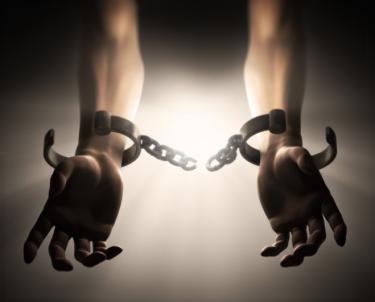
This means that one or more themes, if you like, must switch to their opposite. For example, freedom/captivity (positive/negative) is a story value, and can be used to create meaningful change when a character's experience moves from one side of the coin to the other - when they are freed from captivity or captured from freedom. Love/hate is also a story value, and so is justice/injustice, loyalty/betrayal, peace/unrest, hope/despair ...

... You get the picture.

So, if we look back at the change of Holden leaving his school, what story value switch(es) could we possibly apply? Loyalty to betrayal? There was never loyalty in the first place. Self-righteousness to guilt? He's always felt guilty about his lack of motivation in school. Captivity to freedom? Holden probably sees it this way, but reader doesn't buy it. After all, Holden's cynical perspective is not exclusively directed towards his school, but rather towards the whole world. So while he remains within his own mind, he'll never be free.

Hm. No meaningful change there.

The point is, in every scene of every good story there will always be a reversal in one or more story values. If not, why is the scene there? What does it achieve? Like all the scenes in The Catcher in the Rye, it may be exposition and character perspectives. But these can be worked into scenes that involve meaningful change. It may be difficult, but it's not impossible.

And finally, I'll leave Robert McKee with the last word, because he is pretty much a whole bunch of awesomesauce rolled into a ball of more awesomesauce: "No scene that doesn't turn. This is our ideal."

*There's a reason why I mention this book so often in my posts. Seriously, it's the best $35 I've ever spent.

Thursday, February 16, 2012

Wildcard: Writerly Phenomena

Since I became a writer, I've noticed a few writerly phenomena that can occur from time to time. Some a very different to others, but they're all unnaturally awesome (or un-awesome) and relate to writing in some way. Here are just a select few of them:

Purple Tree Syndrome. This one is pretty generic, and it has more to do with reading than writing - but close enough, I thought. I coined the term Purple Tree Syndrome sometime last week. It basically occurs when you're reading a book and your eyes are looking at the words, but you aren't actually taking any of them in because you are too busy thinking about purple trees or something equally irrelevant. Then you have to go back a re-read the entire sentence, paragraph or even page in order to pick up the meaning you missed the first time. If you have a particularly bad case of the syndrome, you may have to re-read up to three or four times.

Writer Recognition. This is when you can tell a writer from a muggle - I mean, from an ordinary member of society - while knowing very little about them and using only their appearance as a guide. This happened to me the other day when I asked one of my new teachers if she was a writer - and she was! Sweet guessing skills, I know. When she asked why I had asked, I said, "Well, I write stuff, too. And ... you just strike me as the kind of person who would write." Of course, it did help that she was an English teacher.

Aiding the Future. This is always helpful, in any area of life. But, in writing, this happens when you have a seemingly unimportant idea, then months later it turns out to be the most useful idea ever. I had this happen to me when I was stuck in the dark chasms of writers' block (*shudders*). I needed a new idea to move forward, but I couldn't think of anything that would fit. Then suddenly I remembered an idea I had had four months ago, and I realised that expanding on it would do exactly what I needed! Thank-you four-months-ago-Nick! Of course, the reciprocal of this is Hindering the Future, when you drive yourself down a street that turns out to be a dead end.

Writerly Perception. Perception is a phenomenon, even when it isn't related to writing (I was shocked when I learned that, too). But it's still incredible how different people view writing very differently. This image that's been circulating Facebook recently pretty much sums that all up:


So, there you have it. What are a few writerly phenomena you've come across?

Monday, February 13, 2012

Origins: How I Became A Writer


I have an innate love for stories. I've loved them since before I can remember, and it was this innate love that led me to where I am right now, sitting in front of the computer writing about how I became a writer. It's this innate love that will lead me into the future.

Before I could write, I simply started with telling stories in any other way I could. And there stories weren't always mine - in fact, mostly they were other peoples'. In particular, I remember being obsessed with Peter Pan to the point where I re-created it through the use of designing fridge magnets of the characters and props.

I upped the ante when I was five by learning to read, write and hold a pencil. Suddenly my love of stories was coupled with a love of words, sentences and writing in general. I no longer had to resort to fridge magnets.

Over the next several years I made writing a good hobby. I wrote approximately five gazillion first pages to many different stories - all of which are locked somewhere deep down in the dungeons of my laptop and haven't seen the light of day since I first created them. I never really advanced in my writing during that time period, but writing never really left me either.

When I started high school, I was required to do a year-long project as homework. In other words (or the same words rearranged), a homework project that took the whole year. I decided to take a shot at writing a novel, with absolutely no idea whatsoever about what I was in for. I thought that I could learn how to do everything involved with writing a novel in a couple of weeks, plan out a story, write it, revise, and then get it published - in a year. And then it would probably become a best-seller, too.

One year later, I handed in a terrible plot outline and 5,000 words to my teachers.

But it doesn't matter, because I learned so much that year, and I began to get serious about writing. I began to call myself a writer. And once I began to call myself a writer, it's then that I became one.

Then, a year ago today, I plunged another similar world, again with no idea what I was doing. One year ago today I started this blog, which was Ellipsis Station at that point. It took awhile to get things rolling, but eventually I found a whole bunch of awesome people - and not just people, writers! I found you! So thanks for being awesome, keeping me company, and convincing me that I'm not the only one out there crazy enough to love writing.

So, that's how I started. What about you?

Thursday, February 2, 2012

Guest Wildcard: The Just Culprit, or the Culprit Just?


Today I have the privilege of welcoming a very important person to me. He's a gifted teacher, preacher, and as you'll soon learn, writer. With many years of experience behind him (I'm not sure if he'd appreciate me saying how many), he today delves into one of the sneakiest adverbs. So, with no further, may I introduce my fantastic dad, Warren Hight. (And because everyone loves giveaways, he's featuring one of those, too!)

*     *     *     *     *

I was marking an assignment the other day, a book review. The student had written that the author “in the first chapter just laid out the basic facts.” The basic facts in this case were foundational to later steps the author went on to develop. I stopped because something jarred within me as I read it.

If the basic facts were essential to what followed, how in any possible reading of them could the author just lay them out? That little word had robbed his sentence of all its power. The author laid out the basic facts, nothing just about it. It was intentional, it was necessary.

I remember years ago I was attending a chapel service and during the notices the speaker stopped short and said, “Bother, I used that word.” What word? I had to think back over what he had said. It was this same little culprit. An adverb, I believe. And I have been told by the owner of this blog site that a writer ought to avoid adverbs—and clichés—like the plague.

Yet I find myself saying it all the time—and then correcting myself; because if it’s worth doing or saying it’s worth not just doing or just saying! “What are you up to?” “Just writing.” Not meaning, exclusively focussed on a writing. Not meaning, go away I’m busy. Meaning, oh, it’s not so important, I don’t think you’d really be interested. Writing Fire suggests passion, determination. Nothing just about that, you know!

Now, I don’t even need to argue that just is a very good word—perhaps even one that any character in any story could justly own. Just and true, noble; or, “Oh, that things were just” (we can come to terms with unfair, eventually); and, of course, when you have just finished something, meaning only now have you completed what you were doing—who can fault that? But when I short change the labour, discounting the noble intent, this is what I abhor, and abhor in myself as often as it slips out. “I just wanted to give you a call,” and we sound somehow apologetic.

The Just So StoriesI am awed to think that writers and authors will read this; I wonder if your characters let slip the occasional ‘just’ without thinking? I suppose a character saturated in the argot of some levels of conversational culture will accurately reflect this tendency of ours, and be the better drawn character for it! But story characters are often less lazy than we are in real life, and the words of their speech are born of due deliberation.

My admiration goes to Nick for his initiative with this blog, and my thanks to him for entertaining the idea of me posting a “wild-card” blog. I just hope he’ll publish it. And if he does, by way of thanks, I’ll have a copy of Kipling’s Just So Stories sent to a random commenter.

Thursday, January 26, 2012

Writing Advice: Finding Peace in the Darkness

Have you ever had a really peaceful experience? A time when, somewhere deep inside your heart and mind, you simply feel good or unafraid; and somehow you know, or at least hope, that the universe is unfolding exactly as it should? I know I've been there.

Peace can come in two different packages. First is peace because of the circumstances. This is when the sun is shining, everything is perfect, and you reflect on life with a smile on your face and the most gratitude you've ever felt. But second, second is peace in spite of the circumstances. This is when nothing is going right, you're at rock-bottom in the midst of darkness; bleeding, hurting, dying - but even so, you still hear that little voice that says, "Don't give up. Things will turn out. There's hope yet."

In this way, if we choose to, we can feel peace in the darkness. And so can our characters.

In Inheritance by Christopher Paolini, there's a fantastic scene in which Eragon realises that the world is round. He has the weight of the world on his shoulders and fate of it in his hands, and he has just flown out of a terrible storm on the back of his dragon. But despite this, when he notices the curvature of the horizon (something he has never seen before), he's wonderstuck. And he forgets all of his worries for a moment and finds peace, in awe of the world's roundness.


Or what about the scene in The Return of the King when Sam and Frodo are on the slopes of Mount Doom? Who could forget it? The pair are famished and parched, frightened and lost, and surrounded by blackness and an inhospitable landscape. They're cold and dying. But in such despair, and after all the horrors they've been through, the recall to each other life as it blissfully was back in the Shire - and not only find peace, but also the hope and courage they need to complete their quest. The result? An incredibly moving scene.


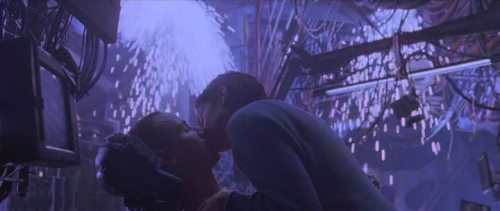
Or in The Matrix, when the machines are closing in and Trinity has every reason to run screaming. But instead, she finds peace enough to stay with Neo and even say, "I'm not afraid anymore."

Am I making sense yet?

Having your characters find peace in the darkness, usually near the climax of the story, can heighten the emotional investment of the reader. It makes the reader long further for the protagonist to achieve his or her desire, because we admire characters who can trade fear for peace, sorrow for joy. We want those kind of characters to win.

And when they do, the reader is all the more moved because of it.

Monday, May 2, 2011

Ashed, And Why We Write


I haven't written a post for ages - and the reason is not that I forgot, or that I've been too busy, the reason is that I've been putting it off. I've been putting it off because over the last few weeks I've had to make a decision, and it's one that I know a lot of you won't like. ...

... I've decided to stop writing Ashed.

Please refrain from getting out your rotten tomatoes yet. To help explain, I'd like to show you the single best guide to writing a novel that I have ever come across. While this video is titled How to Write a Book, it also gives insight into why to write a book. It doesn't contain any practical tips, but it's truthful and inspiring. Just watch:


The main message of this video is that to write a novel you must simply fall in love with a story - because if you do that, then you'll be willing to learn the skills, develop the talent, and persevere until you have a finished novel. In Kaleb Nation's words, if you love the story, you'll "do whatever it takes to make it work, and turn that idea into a book." If that involves years and years of work and of learning how to master your craft, then so be it. 

So here's how Kaleb hits two birds with one stone, without even trying:
  • How do you write a novel? You fall in love with the story.
  • Why do you write a novel? Because you love the story.
And when writing Ashed started to become a chore a few weeks ago, when I was feeling less interested in or motivated to write the story, I remembered this video. I asked myself why I was writing Ashed.

And everything became suddenly clear. I wasn't writing Ashed because it was the story I had fallen in love with. I was writing it to get more followers on my blog. And while I'm confident that it would have brought in new followers, it's more important that I write for the right reasons.

And I'm not saying I don't like the story - I just don't love it. I think it has a great premise, and I had an amazing idea for the ending in mind. But while I was writing about Lexus, I found myself often dreaming about Zeth, and longing to write about him instead. For those of you who don't know who Zeth is, he's the hero of the novel I write in that sheltered writing room away from the rest of the world. He's the hero of the story most people don't hear very much about. But he's also the hero of the story I love, and the story I'm willing to put years and years of effort into.

And as long as I'm writing Ashed, both it and my main novel will be half-hearted efforts.

So I made a tough decision. I may yet finish Ashed. But don't count on it. For now, I'm focussing all my attention back on Zeth's story.

Remember, write because you love to write. Write stories because you love those stories. Make those your only reasons. I guarantee you'll regret it otherwise.

Thursday, March 17, 2011

How Not to Fail at Writing

On Tuesday I watched the trailer for a movie coming out called Limitless. It started off by zooming in on a shabby looking man walking the streets of a huge city (probably New York). Then there was a voice over that went a little like this:

"See that guy over there? That's me. I've got an excuse for looking like this: I'm a writer."

Legend. What a legend. I don't care if he's failing at life, he's a writer, and therefore he's a legend.

Anyway, if you watch the trailer here, you will find out that this guy is given a stock of pills that will unlock all of his brain's potential, making him super-smart and super-prolific. Halfway through the trailer, after taking his pills, we learn that he finished writing his book in just four days. It shows a snippet where he walks into an editor's office, tosses his manuscript on her desk and says, "I'd like to renegotiate my advance."

BOOM. I suddenly know why this guy was failing at life before he started taking the pills.

He didn't know how to operate properly inside the publishing industry.

So without further ado, here are a couple of points to make sure you aren't that guy who has to wait for some other guy to give you some drugs so that you can succeed at writing:

1) Never rock up to a publishing company uninvited. Sure, you have this awesome manuscript you want to pitch, and sure, you live just down the road, and sure ... blah, blah, blah. But no-one wants to see you. It's the same with calling on the phone - don't do it, ever. Editors don't want to hear your voice. There is a proper process to getting published, and that isn't part of it. The proper process involves these things called query letters, and you don't even send out your query to a publisher.

Which brings me to my next point.

2) Get an agent. You shouldn't be in an editor's office at all, let alone throwing your manuscript at them. There's a middleman called an agent. And that is who you send your query letter to. He will then do the talking with a potential editor, and the negotiations. Your agent takes a commission fee of usually about 15%, but there are incredibly good reasons to get one:

  • While publishing companies are full of good, kind people, they won't hesitate to royally screw you and exploit you. If you have an agent, this won't happen.. That is because an agent knows the industry, the legal side of things, and will point out clauses in your contact that you never thought mattered.
  • But the main reason is, simply, that most publishers now days do not want to work with authors directly at all. Since an agent is hard to get, a publisher will know they are getting something decent when they are approached by one.
There are volumes to write on agents (and volumes have been written), so I'll leave it at that for now. But other great sources to check out are How to be Your Own Literary Agent by Richard Curtis (the title makes me laugh because this book really explains that there are so many things that an agent does that you would not want to be your own one) and this blog post by Moonrat, an anonymous New York editor.

3) Don't rely solely on writing. If you do, and things don't work out (or at least you aren't earning enough to support yourself for the moment), you're screwed. You need a day job, unless you are fourteen and your parents feed you (lucky me). If you don't have parents who feed you or a solid day job that brings in money every week as you start off in your writing career, you are probably going to end up like the guy from Limitless. You'll start taking drugs. Except you probably won't be into brain enhancers, instead it will be cocaine and heroin. 'Nuff said.


And those are my tips for the day. Yes, yes. This is a post for writers - congratulations, you noticed. If you're not a writer, go find a writer friend and tell them about this blog. They might just be interested.

If you are a writer ... you are a fricken legend.
Related Posts Plugin for WordPress, Blogger...